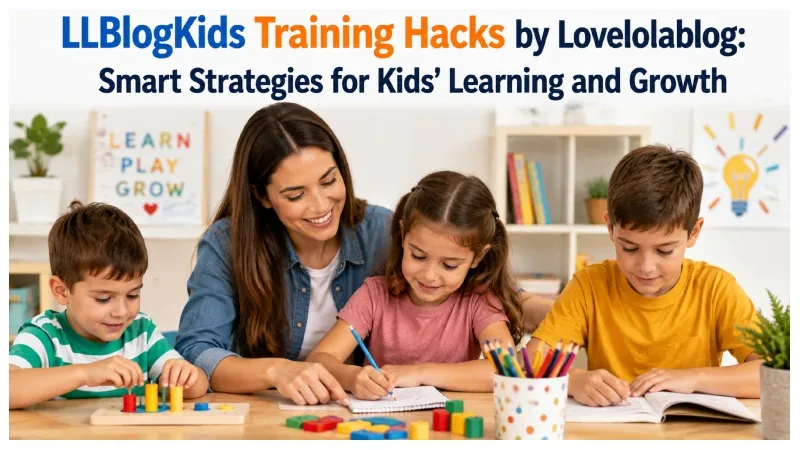
Helping children learn new skills is not about making every activity feel like a formal lesson. The most effective approach often combines structure, play, encouragement, and repetition. Parents and educators can turn ordinary moments—getting ready for school, reading a book, cleaning up toys, or solving a simple puzzle—into useful learning opportunities. LLBlogKids Training Hacks by Lovelolablog focuses on this practical idea: children can develop important academic, social, and everyday skills when adults make learning engaging and age-appropriate. The LLBlogKids material also emphasizes a balance between structured learning and creative activities rather than relying on strict methods.
This guide explains how parents and educators can apply these ideas in real-world settings while keeping expectations realistic.
What Makes a Good Training Strategy for Kids?
A useful training strategy should match a child’s age, abilities, interests, and attention span. Children do not all respond to the same teaching method, so flexibility matters.
Instead of asking a child to complete a long activity, break the goal into smaller steps. For example, if a child struggles with reading, start with a few pages and discuss the story afterward. If a child has trouble cleaning up, begin with one category of toys rather than asking them to organize an entire room.
The goal is progress, not perfection.
1. Turn Daily Routines Into Learning Opportunities
One of the easiest ways to support children’s development is to use routines as informal lessons. Daily activities provide repeated practice without making children feel as though they are constantly studying.
For example:
- Count fruit while preparing a snack.
- Ask a child to sort laundry by color.
- Let them help make a simple shopping list.
- Practice sequencing while getting ready for school.
- Read a short story before bedtime.
Consistent routines also help children understand what happens next and can make transitions easier. Research and parenting guidance emphasize that predictable routines can support positive behavior, independence, and healthy habits.
2. Use Small Goals Instead of Big Demands
A common mistake is expecting a child to master a skill too quickly. A better method is to divide the skill into manageable pieces.
Suppose an educator wants a student to improve handwriting. Instead of assigning several pages immediately, begin with:
- Correct pencil grip.
- Practice a few letters.
- Write short words.
- Build simple sentences.
- Review progress together.
This approach gives children more opportunities to succeed. Small wins can also make challenging activities feel less intimidating.
3. Make Learning Active
Children often engage more deeply when they can participate rather than simply listen.
Try turning lessons into activities. Math can involve blocks, coins, measuring cups, or household objects. Vocabulary can become a picture-matching game. Science can involve observing plants, weather, shadows, or everyday materials.
LLBlogKids Training Hacks by Lovelolablog can be understood through this broader principle: learning becomes more meaningful when children actively interact with the subject instead of passively receiving information.
For educators, this can mean adding movement, questions, demonstrations, drawing, role-play, or hands-on tasks to a lesson.
4. Use Positive Reinforcement Carefully
Praise can encourage children when it clearly identifies the behavior adults want to see.
Instead of saying only, “Good job,” try something more specific:
“You put all your books away without being reminded.”
This tells the child exactly what they did well.
The American Academy of Pediatrics notes that rewards can support clearly defined positive behaviors, while the CDC recommends specific praise and immediate positive feedback when teaching young children.
Rewards do not always need to be toys or treats. A sticker, high-five, extra story, or special time with a parent can work as simple recognition.
The important point is to reward realistic behaviors and avoid making children feel that they must be perfect to earn approval.
5. Try the “First, Then” Method
A simple sequence can reduce arguments and make expectations clearer.
For example:
First: Finish the reading activity.
Then: Choose a favorite game.
Or:
First: Put the art supplies away.
Then: Start the next activity.
This method gives children a clear connection between responsibility and enjoyable activities. It can work particularly well during homework, bedtime, cleanup, and morning routines.
6. Encourage Questions Rather Than Giving Every Answer
Good training should develop thinking skills, not just obedience.
When a child asks, “Why does this happen?” resist the urge to immediately provide the answer. Ask what they think first.
Useful prompts include:
- “What do you notice?”
- “Why do you think that happened?”
- “What could we try next?”
- “How could we solve this another way?”
- “What would happen if we changed this?”
These questions encourage curiosity and give children opportunities to explain their reasoning.
Head Start guidance similarly encourages adults to engage children through play, reading, conversation, creativity, and activities that allow children to participate actively.
7. Build a Simple Visual Routine
A visual routine can be especially helpful for younger children.
Create a chart containing simple pictures or words:
Morning Routine
- Wake up
- Get dressed
- Brush teeth
- Eat breakfast
- Pack bag
- Leave for school
The child can check each step after completing it.
This technique shifts some responsibility from the adult to the child. Over time, children may need fewer reminders because the routine itself provides guidance.
8. Adapt Training to the Child
There is no universal training formula.
One child may enjoy storytelling, while another prefers building blocks. One student may focus better in short sessions, while another can handle longer activities. Some children need visual instructions, while others benefit from demonstrations.
If an approach repeatedly creates frustration, change the method instead of simply increasing pressure.
For example, if a child dislikes writing practice, try drawing a picture and asking them to label it. If they struggle with spelling, use magnetic letters or word cards. The learning objective can stay the same while the path changes.
9. How Educators Can Apply These Hacks in Class
Teachers can adapt these strategies without redesigning an entire curriculum.
A classroom activity might begin with a short explanation, followed by a hands-on task and a quick discussion. Teachers can also recognize specific positive behaviors, such as listening carefully, sharing materials, completing a task, or helping a classmate.
Positive feedback works best when children understand exactly what behavior the teacher noticed. Vanderbilt’s early-childhood teaching resources recommend positive feedback when children follow classroom rules and routines.
Teachers can also use visual schedules, small group activities, movement breaks, and age-appropriate challenges to keep children involved.
10. A Practical Example for Home
Imagine a seven-year-old who regularly avoids homework.
Rather than starting with punishment, a parent could create a simple routine:
5 minutes: Prepare the workspace.
15 minutes: Complete one homework task.
5 minutes: Take a movement break.
10 minutes: Finish a second task.
Afterward: Enjoy a preferred activity.
The parent can praise specific effort: “You stayed focused until you finished that page.”
This example reflects the practical side of LLBlogKids Training Hacks by Lovelolablog: create structure, keep tasks manageable, provide encouragement, and adjust the approach when something does not work.
Common Mistakes Parents Should Avoid
Even good strategies can fail when adults apply too much pressure.
Avoid:
- Comparing one child with another.
- Expecting instant results.
- Using rewards for every small action forever.
- Turning every game into a lesson.
- Giving instructions that are too complicated.
- Ignoring signs of tiredness or frustration.
- Treating mistakes as failures.
Children need opportunities to experiment, make mistakes, and try again. Training should support confidence rather than create unnecessary anxiety.
How to Make These Strategies Sustainable
The best strategy is one that a family or classroom can actually maintain.
Start with one goal. If mornings are difficult, focus on the morning routine before introducing a complicated reward chart, reading program, and behavior system.
Track simple progress. Ask whether the child is becoming more independent, more engaged, or more confident. If progress remains limited, reconsider the activity, timing, difficulty, or instructions.
Most importantly, keep communication open. Parents and teachers can learn a lot by sharing what works in different environments.
Final Thoughts
Effective child training is less about strict control and more about thoughtful guidance. Children benefit when adults provide clear expectations, consistent routines, active learning opportunities, and positive feedback.
LLBlogKids Training Hacks by Lovelolablog offers a useful framework for thinking about these strategies, but parents and educators should adapt every technique to the individual child. Practical learning does not require expensive equipment or complicated programs. A story, a routine chart, a household activity, or a few encouraging words can become a valuable learning experience. For more information, visit our website.